
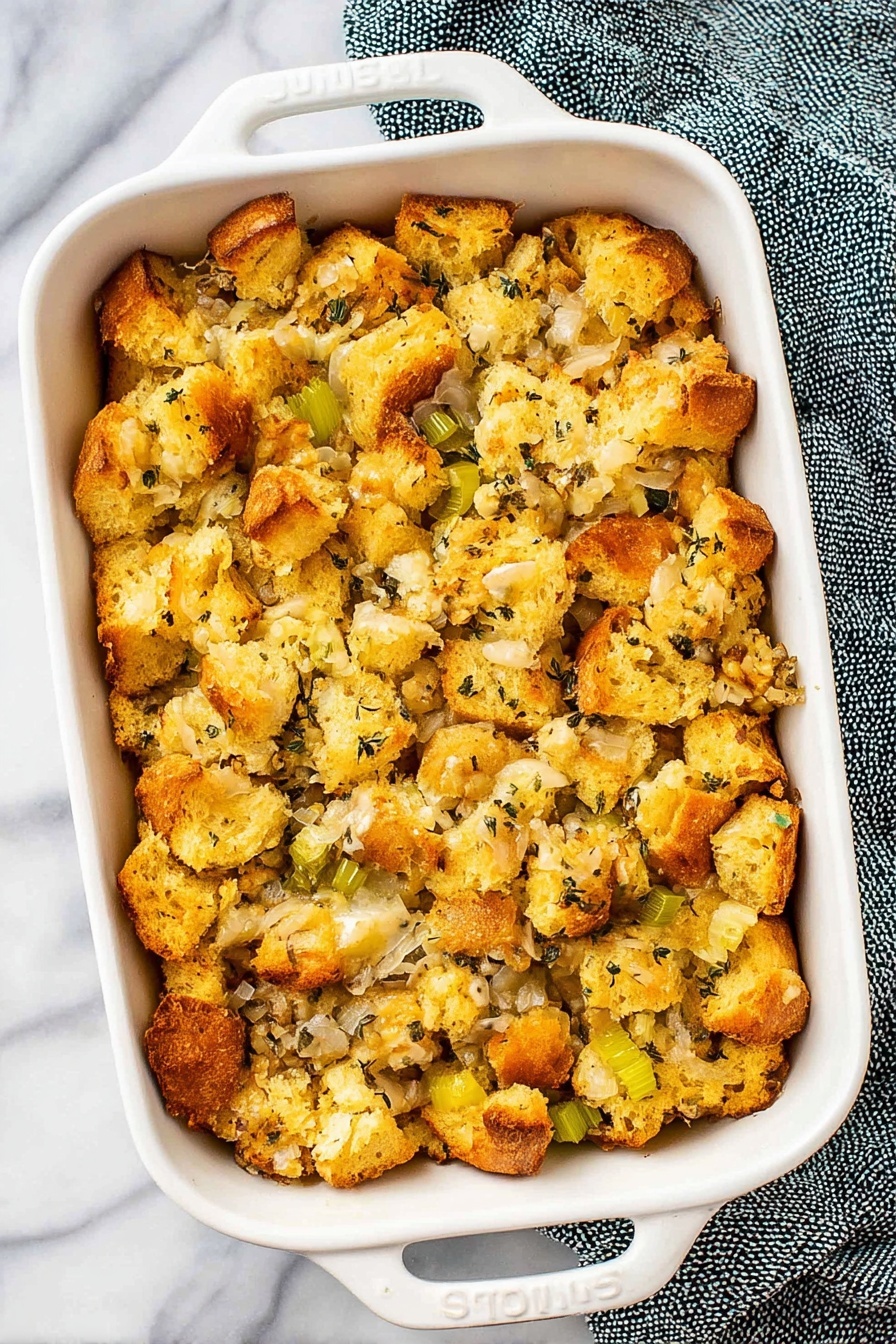
If you’re on the hunt for a comforting, flavorful, and downright irresistible side dish this holiday season (or honestly any day!), my Homemade Stuffing Recipe with Sage and Herbs Recipe is exactly what you need. I absolutely love how this stuffing is packed with fresh herbs like sage and thyme, giving it that cozy, aromatic lift that pairs perfectly with roasted turkey or chicken. Stick with me here—I’ll walk you through all my favorite tips and tricks to get this classic side dish just right every single time!
Why You’ll Love This Recipe
- Fresh Herb Flavor: The combination of sage, thyme, and parsley brings that perfect herbal aroma and taste you want in stuffing.
- Perfectly Moist yet Fluffy: I’ve perfected the liquid to bread ratio so it’s not soggy but stays so tender and delicious.
- Easy to Prep Ahead: You can assemble it a day in advance and bake it fresh, making your holiday kitchen life way easier.
- Family Favorite: My crew always requests this stuffing every year—it’s that good!

Ingredients You’ll Need
Each ingredient in this Homemade Stuffing Recipe with Sage and Herbs Recipe plays its role perfectly. From the sturdy cubed bread that soaks up all those mouthwatering flavors, to the fresh herbs that make it sing, you’ll get a really beautiful blend of textures and tastes. Here are some buying and prepping tips you’ll find super useful.
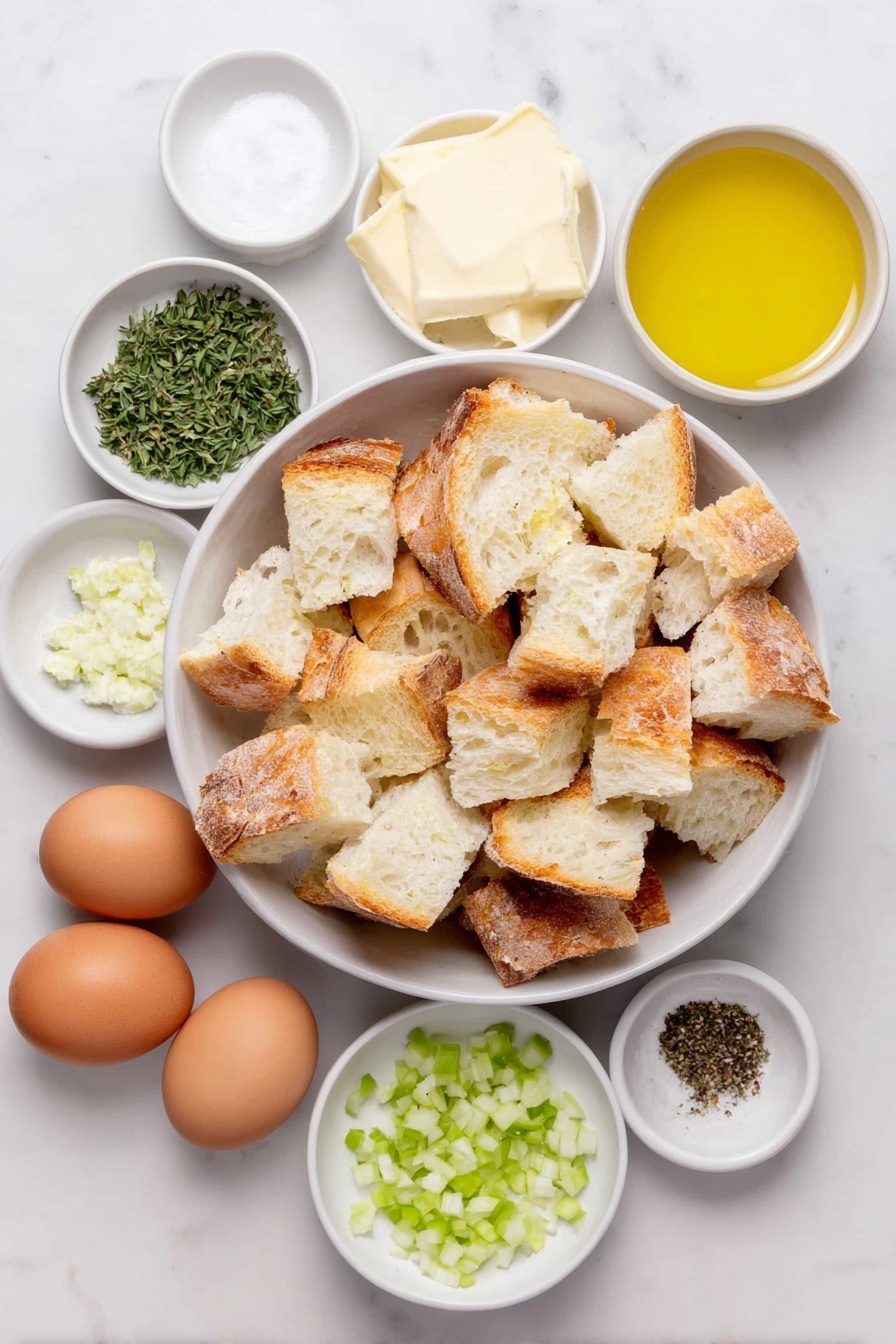
- Cubed Texas toast or French bread: Opt for thick-cut bread, and I recommend slightly stale or day-old bread—it toasts up beautifully and holds the perfect texture for stuffing.
- Unsalted butter: Using unsalted lets you control the salt perfectly; plus, butter is key for that rich base.
- Onion: White or yellow work well—make sure you dice finely for even cooking.
- Celery: Adds a fresh crunch and balances the softness of the bread.
- Kosher salt and black pepper: Basic but essential seasoning to enhance all the flavors.
- Garlic: Minced fresh garlic gives a subtle kick without overpowering.
- Fresh sage: This is the star herb—don’t substitute with dried if you can avoid it; fresh sage makes a world of difference.
- Fresh parsley: Adds brightness and balances the earthiness of sage.
- Large eggs: Bind everything together gently when mixed in.
- Chicken broth: Use good-quality broth for depth; homemade or low-sodium store-bought both work great.
- Fresh thyme: A little goes a long way to complement the sharper sage with its subtle woodsy notes.
Variations
I love that this Homemade Stuffing Recipe with Sage and Herbs Recipe is pretty forgiving and open to customization. Here are a few ways I’ve played around with it—and trust me, you should too, depending on what you’ve got on hand or your taste preferences!
- Vegetarian Option: Swap the chicken broth for vegetable broth to keep it meat-free without sacrificing flavor. I’ve done this for family dinners and everyone loved it.
- Added Sausage: Brown some Italian sausage and stir it in for a heartier version—my family goes crazy for that little meaty surprise in the stuffing.
- Nuts & Fruit: Toss in toasted pecans or walnuts along with dried cranberries for that beautiful sweet and crunchy contrast.
- Herb Swaps: If you don’t have fresh sage, try using rosemary or marjoram—but fresh is always best for this recipe.
How to Make Homemade Stuffing Recipe with Sage and Herbs Recipe
Step 1: Toast Your Bread Cubes to Perfection
Start by preheating your oven to 300°F. Spread your cubed Texas toast or French bread evenly on a baking sheet. Toast the bread for 40 to 60 minutes, stirring every 8 to 10 minutes to get all sides crisp and dry. This step is key—I’ve learned that properly dried bread soaks up just the right amount of broth without becoming mushy. If you’re short on time, you can even use an air fryer for about 6 to 8 minutes, tossing every 5 minutes, which works like a charm.
Step 2: Sauté Your Veggies and Herbs
Turn your oven up to 350°F. Melt the butter in a large skillet over medium heat, then add the diced onions, celery, and minced garlic. Cook everything for about 4 minutes until the veggies soften and release their aroma. Toss in your fresh sage and parsley toward the end, stirring gently to blend those herbal notes in. This step is where the magic starts—we’re layering flavor here!
Step 3: Combine and Toss Gently
Pour the buttery vegetable mixture over the toasted bread cubes in a large bowl. Add kosher salt and black pepper, then toss everything gently so the bread is coated but not broken into crumbs. In a separate bowl, whisk the eggs with the chicken broth and fresh thyme. Slowly pour this liquid evenly over the bread mixture, gently tossing again to hydrate the bread. If you like a moister stuffing—as I often do—a little extra broth (up to ½ cup) is a great trick to get it just how you like it.
Step 4: Bake to Golden-Brown Glory
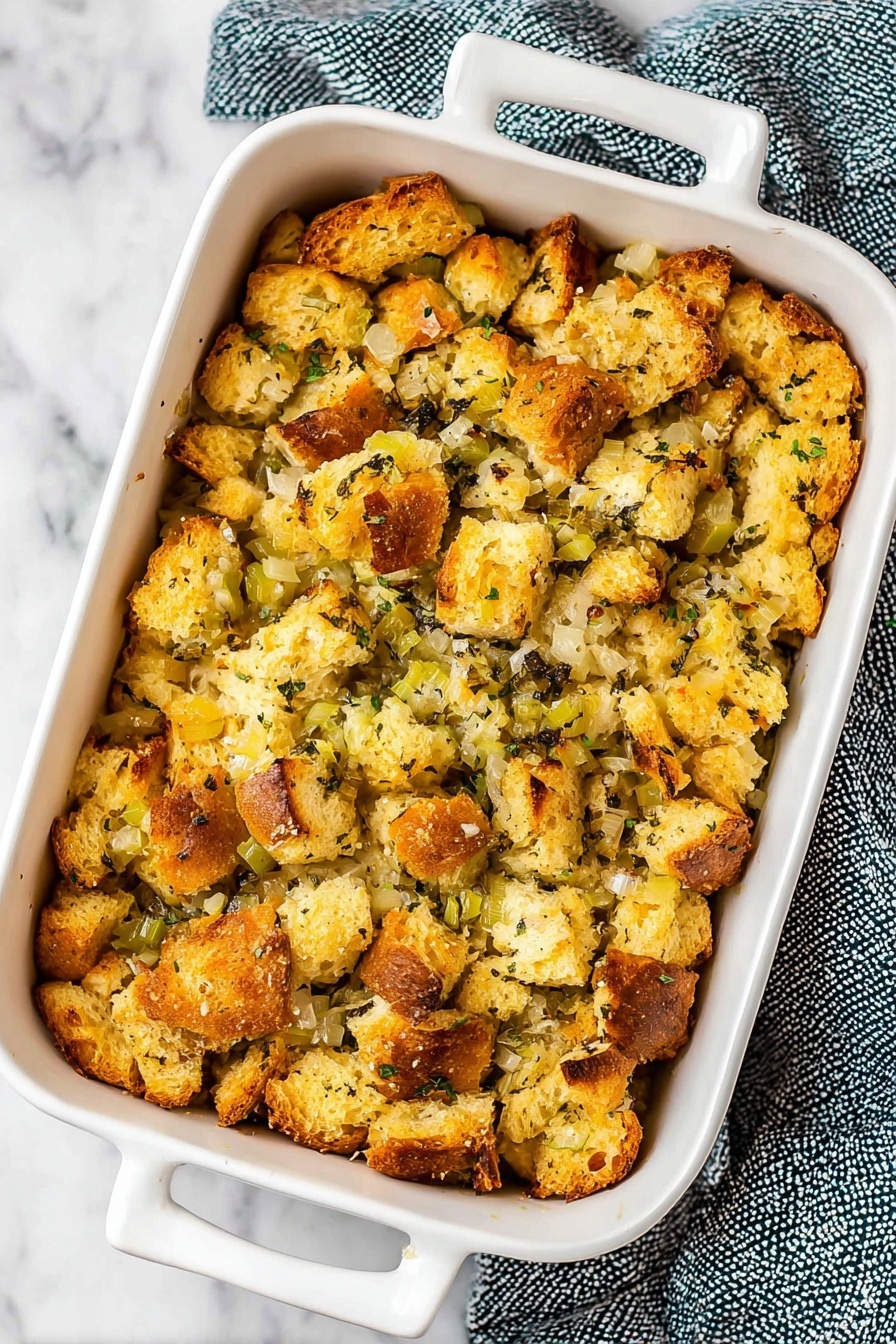
Transfer your stuffing mixture into a greased 9×13 casserole dish and cover it tightly with foil. If you’re not baking it right away, refrigerate it for up to 24 hours. When you’re ready, place it in the oven at 350°F. Bake covered for 30 minutes, then remove the foil and bake for an additional 10 to 15 minutes until the top is beautifully browned and crispy. Serve it hot, and watch it disappear fast!
Pro Tips for Making Homemade Stuffing Recipe with Sage and Herbs Recipe
- Toast Bread First: I used to skip toasting, but the texture really suffers—drying the bread cubes first is a game-changer.
- Fresh Herbs Matter: Using fresh sage and thyme instead of dried gives the stuffing a fresher, brighter flavor—don’t skimp here!
- Adjust Broth Amount: I prefer slightly moister stuffing, so I usually add a little extra broth—start small and add more if you need it.
- Don’t Overmix: Stir gently when combining ingredients to avoid squishing the bread—your stuffing should have nice, distinct chunks.
How to Serve Homemade Stuffing Recipe with Sage and Herbs Recipe
Garnishes
I like to sprinkle a little extra chopped fresh parsley or even some toasted chopped pecans on top just before serving—it adds a lovely pop of color and a subtle crunch. Sometimes a drizzle of melted butter right before serving amps up the indulgence, too.
Side Dishes
This stuffing pairs so well with classic roasted turkey, honey-glazed ham, or even simple roast chicken. I always serve it alongside green beans almondine, cranberry sauce, and mashed potatoes for a full, satisfying holiday plate.
Creative Ways to Present
For special occasions, I’ve baked this stuffing inside hollowed-out mini pumpkins or squash—makes a stunning presentation that’s both rustic and festive. Another fun idea is to bake it in muffin tins for individual servings that everyone loves grabbing at the table!
Make Ahead and Storage
Storing Leftovers
Any leftover stuffing goes straight into an airtight container and into the fridge. I’ve found it stays fresh and tasty for up to 5 days—perfect for whipping up quick lunches or reheating for dinner.
Freezing
I’ve frozen this stuffing successfully in portioned freezer-safe containers. Just thaw overnight in the fridge before reheating, and it tastes almost as fresh as day one. It’s perfect for extending holiday meals or prepping ahead for busy weeks.
Reheating
To reheat, I cover the stuffing loosely with foil and warm it in a 350°F oven for about 20 minutes until heated through. If you want to refresh the top, remove the foil for the last 5 minutes to get that crispy crust again—just like fresh!
FAQs
-
Can I use dried sage instead of fresh in this stuffing recipe?
While fresh sage is best for vibrant flavor and aroma in this Homemade Stuffing Recipe with Sage and Herbs Recipe, dried sage can be used in a pinch. Use about one-third of the amount of dried sage compared to fresh, since dried herbs are more concentrated. Keep in mind the flavor won’t be quite as fresh or bright, though.
-
Is it better to use day-old bread for stuffing?
Absolutely! Day-old or slightly stale bread dries out better during toasting, which helps the bread cubes absorb the broth without becoming soggy. If you only have fresh bread, you can toast it longer or even dry it out in a low oven before starting the recipe.
-
Can I make this stuffing vegan or dairy-free?
Yes! Use vegan butter or olive oil instead of regular butter, substitute chicken broth with vegetable broth, and replace eggs with a flaxseed or chia egg substitute to keep the binding. The herbs and bread still do all the heavy lifting on flavor.
-
How do I reheat leftover stuffing without drying it out?
Reheat stuffing covered with foil in the oven at 350°F, adding a splash of broth if it looks dry before warming. Removing the foil for the last few minutes helps crisp the top again. This method keeps the inside moist and the outside deliciously golden.
Final Thoughts
This Homemade Stuffing Recipe with Sage and Herbs Recipe has been such a staple in my kitchen for years—I love how it brings a warm, nostalgic feeling to the table every time. It’s one of those recipes that feels fancy but is so easy to make, and it always earns compliments (and seconds!). Whether it’s a holiday feast or a cozy weeknight dinner, I hope you’ll give this recipe a try and make it your own little tradition. Trust me, you’re going to love it!
Print
Homemade Stuffing Recipe with Sage and Herbs Recipe
- Prep Time: 1 hour 15 minutes
- Cook Time: 40 minutes
- Total Time: 1 hour 55 minutes
- Yield: 8 servings
- Category: Side Dish
- Method: Baking
- Cuisine: American
Description
This homemade stuffing recipe offers a deliciously savory blend of toasted bread cubes, fresh herbs, and sautéed vegetables, all baked to golden perfection. Perfect as a comforting side dish for holiday meals or any family dinner, it combines the crunch of Texas toast with aromatic sage, thyme, and parsley, enhanced by a rich butter and chicken broth base.
Ingredients
Bread
- 8 cups cubed Texas toast or French bread (about 1 loaf)
Vegetables & Herbs
- 2 cups white or yellow onion, diced
- 3 celery stalks, sliced into ¼ inch pieces
- 1 tablespoon garlic, minced
- 2 tablespoons minced fresh sage
- ½ cup minced fresh parsley
- 1 tablespoon minced fresh thyme
Other Ingredients
- ½ cup (1 stick) unsalted butter
- ½ teaspoon kosher salt
- ½ teaspoon freshly cracked black pepper
- 3 large eggs, lightly beaten
- 1 ½ cups chicken broth (plus up to ½ cup more if desired)
Instructions
- Toast the Bread Cubes: Preheat the oven to 300°F. Spread the cubed bread evenly on a baking sheet. Bake for 40 to 60 minutes, stirring every 8 to 10 minutes until the bread is dry and crispy. Remove from oven and transfer to a large bowl to cool.
- Sauté Vegetables: Increase oven temperature to 350°F. In a large stovetop skillet or pan, melt butter over medium heat. Add diced onions, sliced celery, and minced garlic. Cook for 4 minutes, stirring occasionally until softened and fragrant.
- Combine Bread with Vegetables and Herbs: Pour the sautéed vegetable and butter mixture over the toasted bread cubes. Toss gently to coat. Add kosher salt, freshly cracked black pepper, minced sage, and parsley. Toss again to evenly distribute the seasonings.
- Add Eggs and Broth: In a small bowl, whisk the eggs until well beaten. Pour the eggs evenly over the bread mixture. Following that, pour 1½ cups of chicken broth evenly over the bread cubes. Gently stir or toss to distribute liquids without breaking down the bread. For a moister stuffing, add up to ½ cup more broth as preferred.
- Prepare for Baking: Transfer the bread mixture into a greased 9×13 inch casserole dish. Cover the dish tightly with aluminum foil. If not baking immediately, refrigerate for up to 24 hours.
- Bake the Stuffing: Place the covered casserole on the middle rack of the preheated 350°F oven. Bake for 30 minutes covered. Then uncover and bake for an additional 10 to 15 minutes until the top is golden brown and crisp. Serve hot immediately.
Notes
- Storage: Store any leftover stuffing in an airtight container in the refrigerator for up to 5 days.
- Make-Ahead: Prepare the stuffing up to a day in advance without baking. Cover tightly and refrigerate. Before baking, let sit on the counter for 30 minutes to 1 hour to warm up.
- Pre-Cubed Toasted Bread: To save time, use pre-cubed and toasted bread from the grocery store bakery section—use about 8 heaping cups for this recipe. Adjust ingredient quantities if using more bread.
- Toasting Bread Ahead: Bread cubes can be toasted a day ahead and stored until ready to assemble.
- Air Fryer Alternative: Toast cubed bread in an air fryer at 300°F. Toss cubes every 5 minutes until dry and crispy, about 6 to 8 minutes per batch.
Nutrition
- Serving Size: 1 cup
- Calories: 220
- Sugar: 2g
- Sodium: 450mg
- Fat: 11g
- Saturated Fat: 6g
- Unsaturated Fat: 5g
- Trans Fat: 0g
- Carbohydrates: 26g
- Fiber: 2g
- Protein: 6g
- Cholesterol: 75mg